Gemilai Owl G3006 Espresso Machine Review
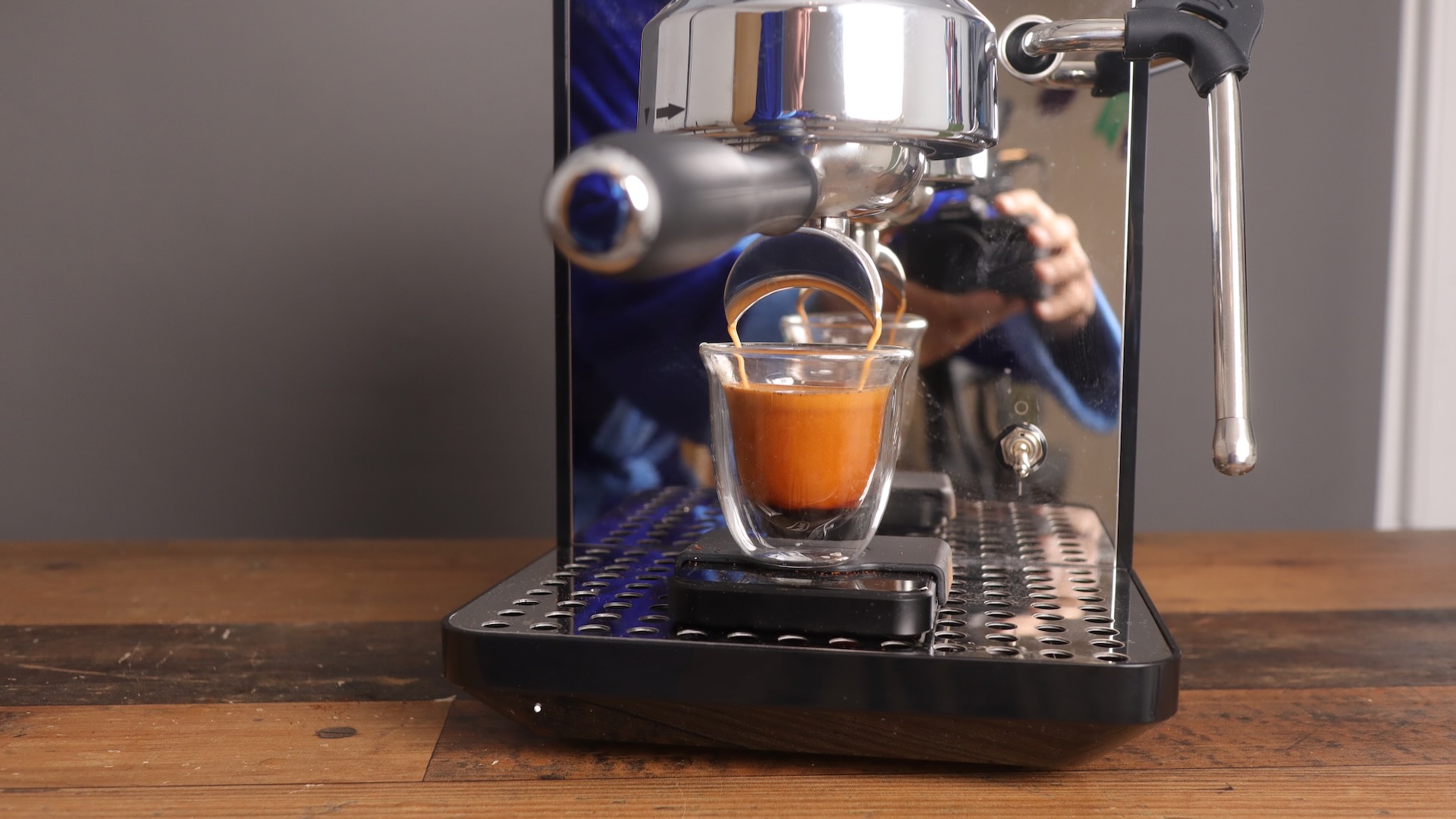
Introducing the Gemilai Owl
I’ll be honest. It took me a long time to warm up to the idea of the Gemilai Owl. While it’s packed with features, I did think it was quite homely, and I am not normally a fan of E61 brew group machines. But, after having lived with the Owl for 2 months, I have to say that Gemilai is winning me over.
Just keep in mind, this is a fully manual machine. That means it doesn’t come with an integrated grinder or volumetric dosing, like the Barista Express. It may not look as polished, either, but it does have a lot of cool features.
Right off the bat, let’s talk about what features this espresso machine comes with:
– Thermoblock PID control, with the thermoprobe on the exit of the thermoblock
– Small circular display for setting the temperature, and to act as your shot timer
– Timed and manual buttons on the top for your extractions
– Manometer with gray dial
– 58mm portafilter and accessories
– Articulating and LONG steam wand, for excellent milk steaming
– 3 way solenoid to release pressure off the puck after extracting
– Pseudo pre-infusion, but more on that later
– Stainless steel lined thermoblock
Whew, that’s a lot of features! But, is it worth the price tag? Let’s dive into that in this article.
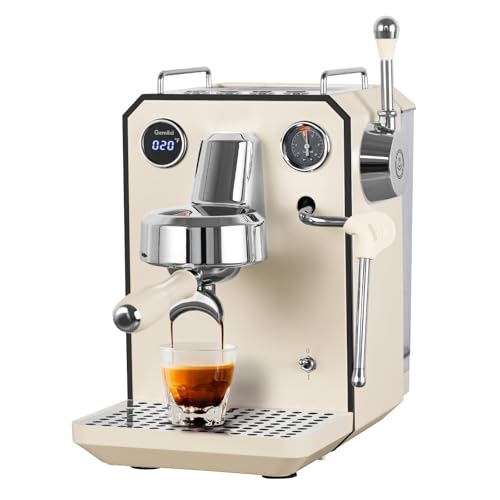
Design and feautures of the Gemilai Owl G3006
The Owl definitely has a unique look. With the E61-styled (it’s not a real E61) grouphead sitting between the PID control and manometer, it almost looks like a face, with the brewgroup being the extending nose. I still don’t think the machine is pretty, but to each, his own.
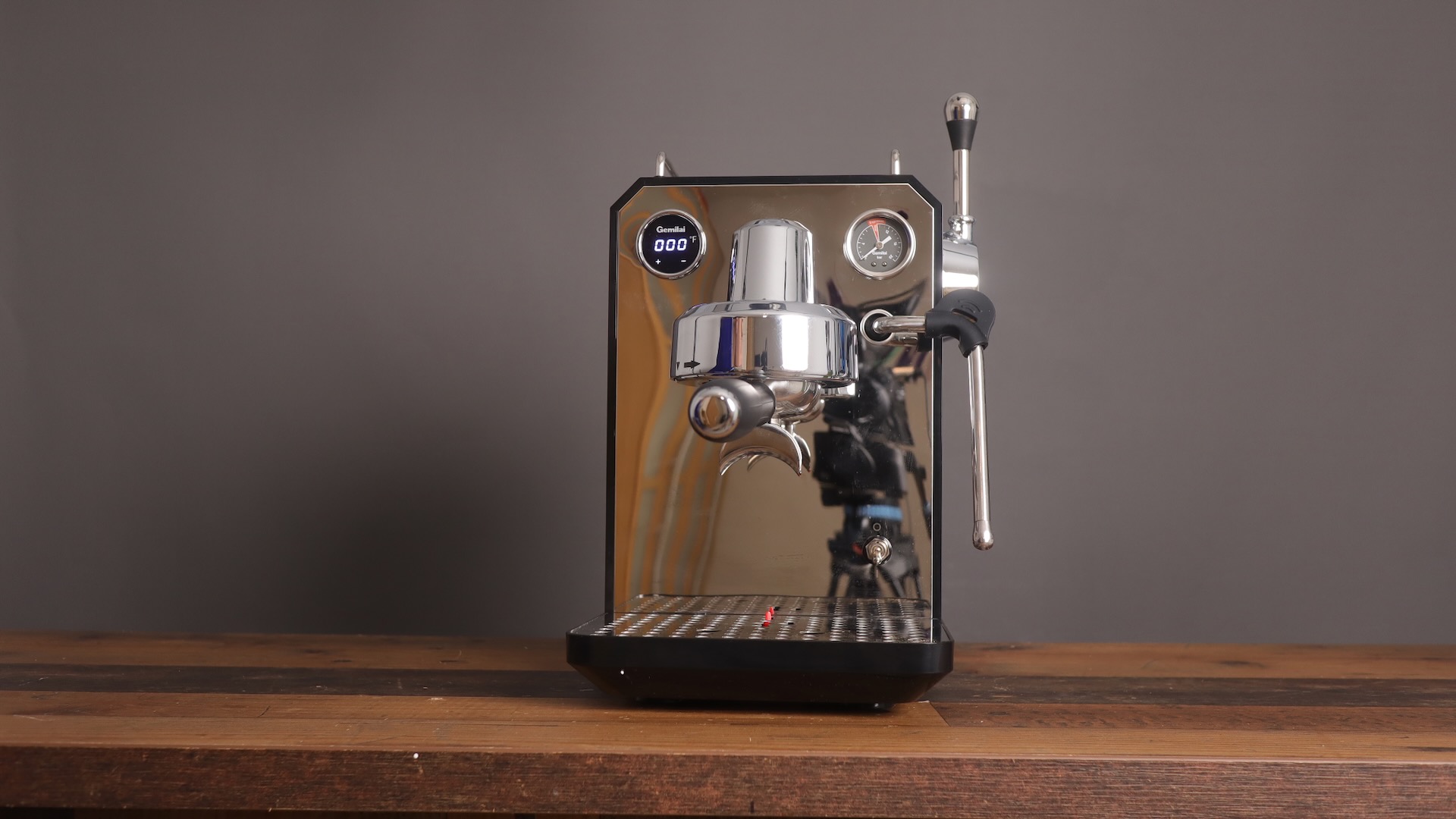
Gemilai Owl G3006 – Hero photo
On the top of the machine, you will find four buttons adorning the front of the fascia:
- 1 Cup (timed)
- 2 Cup (timed)
- Manual (as long as you want)
- Steam
To be honest, I mostly used the 3rd button, the manual shot. This is because espresso extractions can change a lot, based on grind size, dose, the bean you’re using, and the consistency of your grinder. Some people will like using the timed shots, but I prefer to go manual.
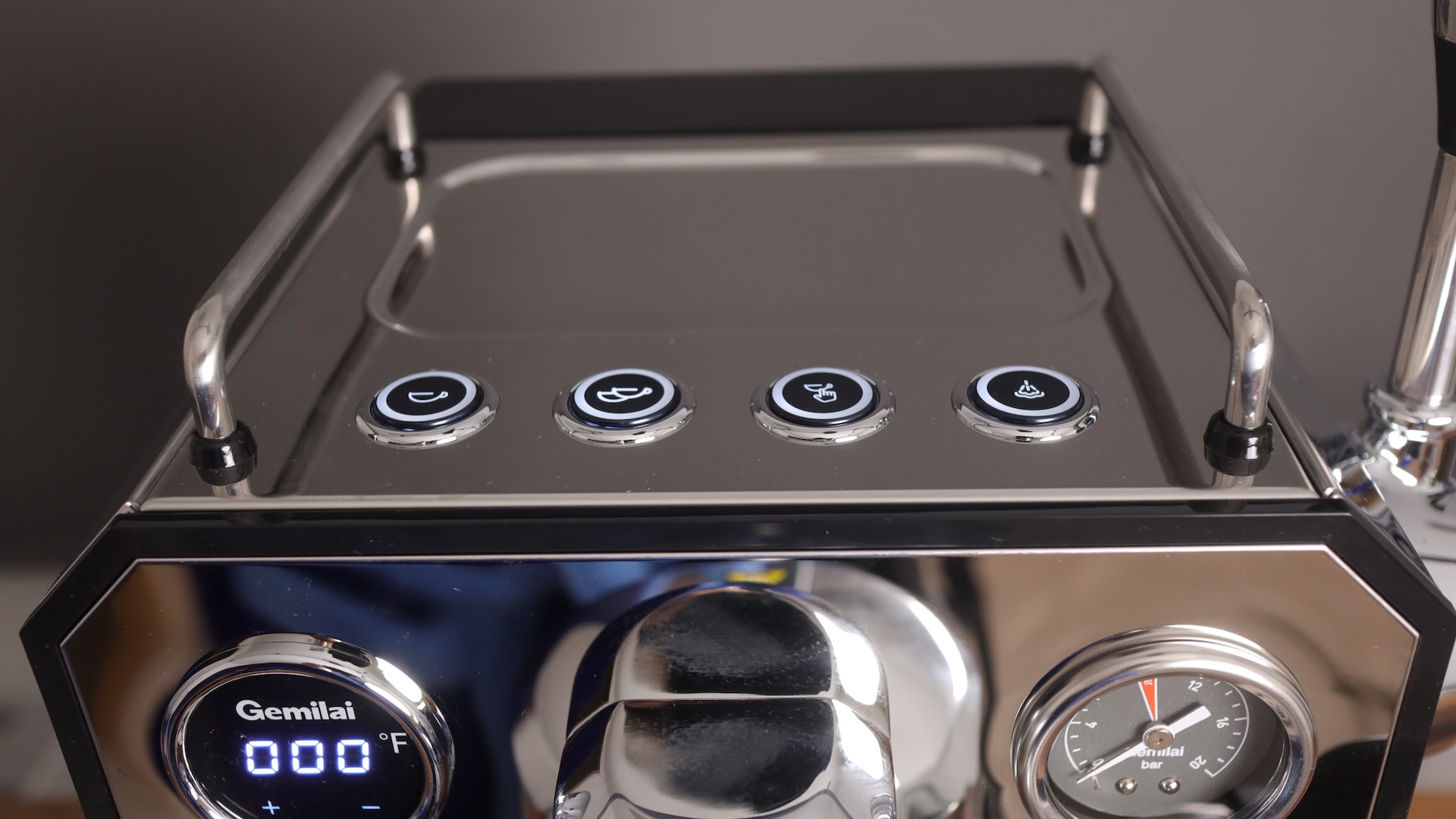
Gemilai Owl G3006 – Top Panel
Notice the Gemilai branded circular display on the left. With this, you can set the temperature in 1 degree increments from 176-215 degrees. Note that this is just in Fahrenheit. On the right, you see a nice looking manometer, with gray dial and white tick marks. There’s a red area that shows the espresso zone.
On the right side of the machine you will see the heavy and over-dimensioned steam lever. This simply activates a microswitch inside the machine, but it is a nice haptic touch, even if it is a little bigger than it needs to be.
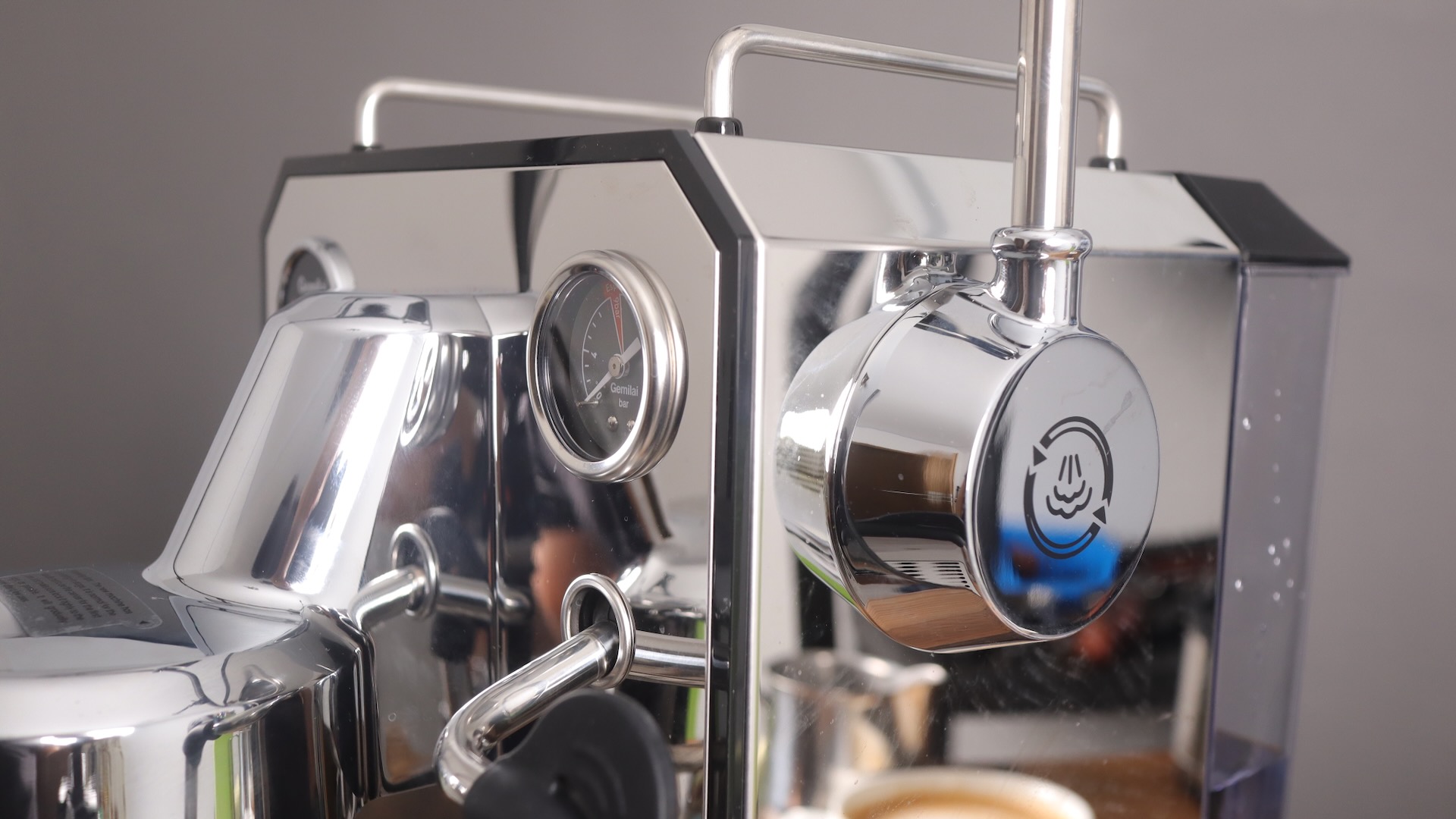
Gemilai Owl G3006 – Steam lever
I do appreciate the manometer. It’s not one of those shaky types, but pretty rock solid in the display, and it shows a red zone between 8-9 bar for espresso. Just know that the over pressure valve (OPV) is set at around 11 bar, but you can reach an 8-9 bar extraction if you grind and dose properly.
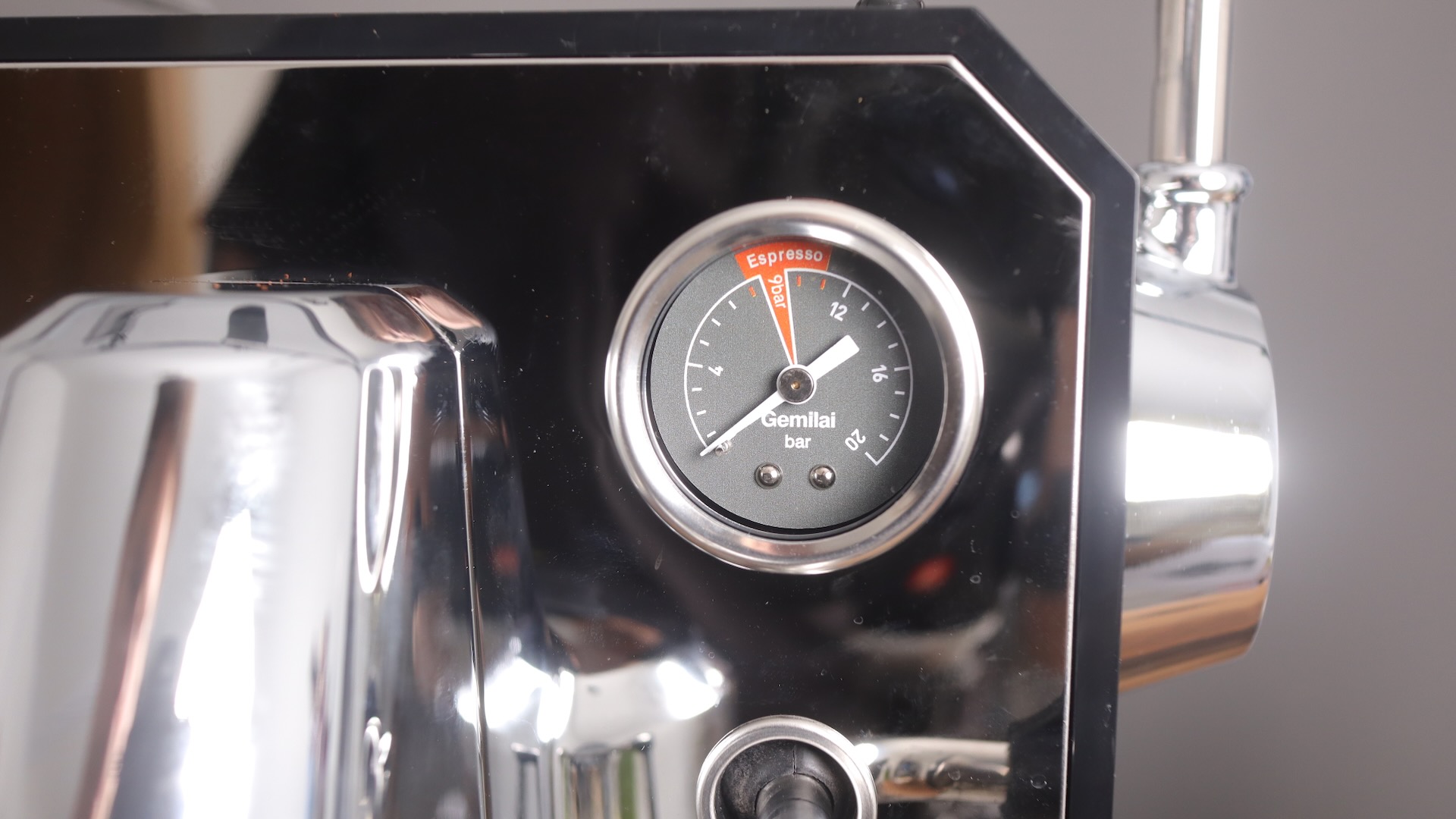
Gemilai Owl G3006 – Manometer
On the back side of the machine you will find the large 57 ounce water tank. It does not have a water sensor in it, so you MUST be sure to check periodically, so that it doesn’t run out mid-shot.
I recommend changing the water out daily anyway, with fresh filtered water, as this will result in better tasting drinks.
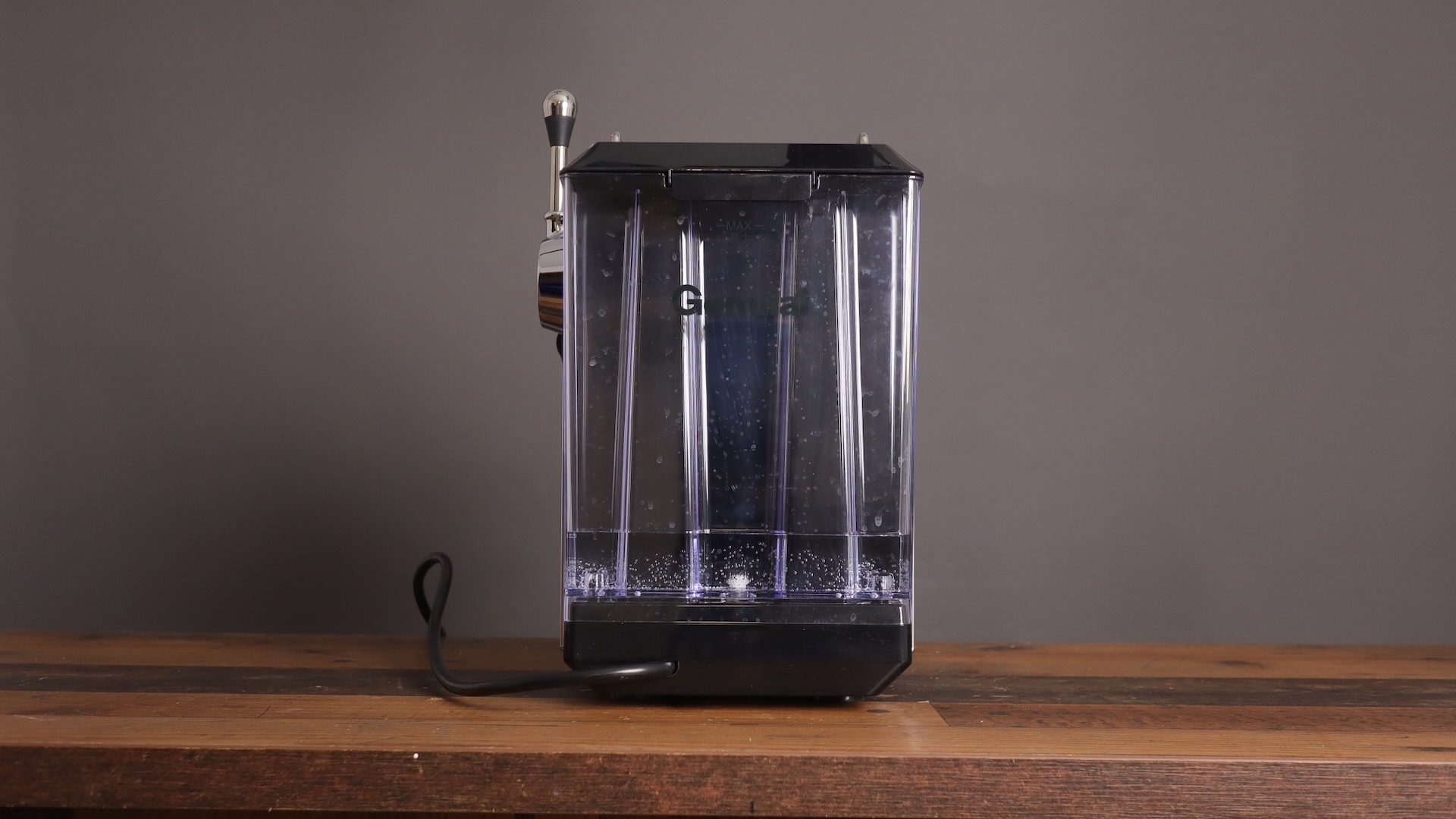
Gemilai Owl G3006 – Back side
I think it’s also good to include a picture of the bottom side as well. Here you see the ABS molded plastic of the bottom, as well as the rubber feet and the manufacturer’s sticker. Note that is says this machine is for household use only.
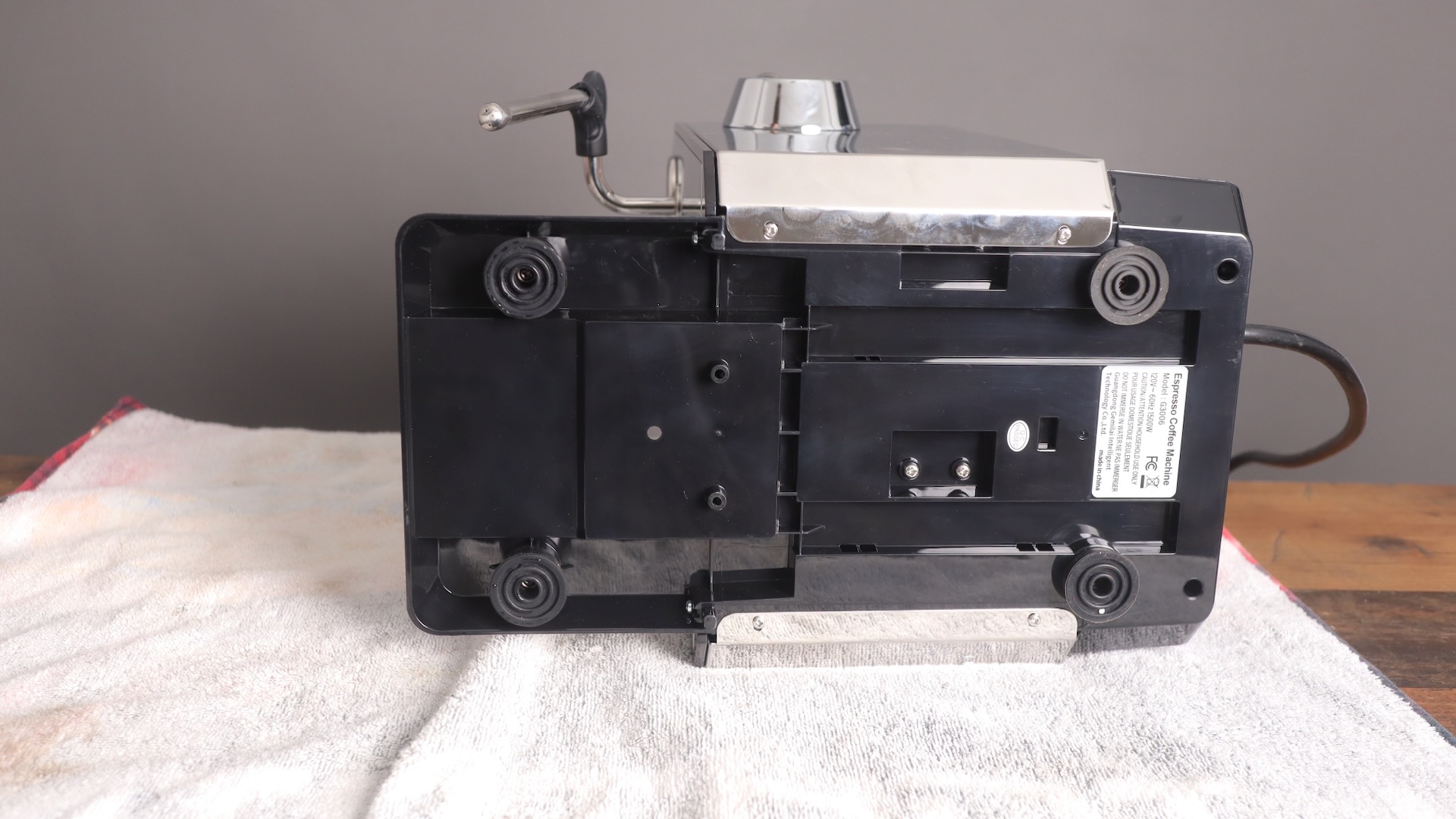
Gemilai Owl G3006 – Bottom side
Gemilai Owl vs Breville Bambino Plus
Many people like to draw the comparisons between these two machines, but I find them quite differentiating. The Bamino Plus has the newer thin-film technology ThermoJet heater, which is very dynamic and can heat up in 3 seconds. It also has a smaller 54 mm portafilter, and it can do volumetric dosing.
The Owl on the other hand uses the conventional thermoblock technology, which takes about 1 minute to heat up. It has a 58mm portafilter, which many people prefer, and a nice shot timer and manometer as feedback for your shots.
Honestly, BOTH machines are very good at steaming milk. But, the biggest advantage the Owl has over the Bambino (besides price) is the heated brew group…
E61-like Heated Brewgroup!
Do you see the 4 white wires going from the PCB on the right, to the brew group on the left (middle of the picture)? Those are wires going to 2 heaters in the brew group. This allows the Owl to have similar kind of pre-heated brew group performance, like the E61 machines it emulates.
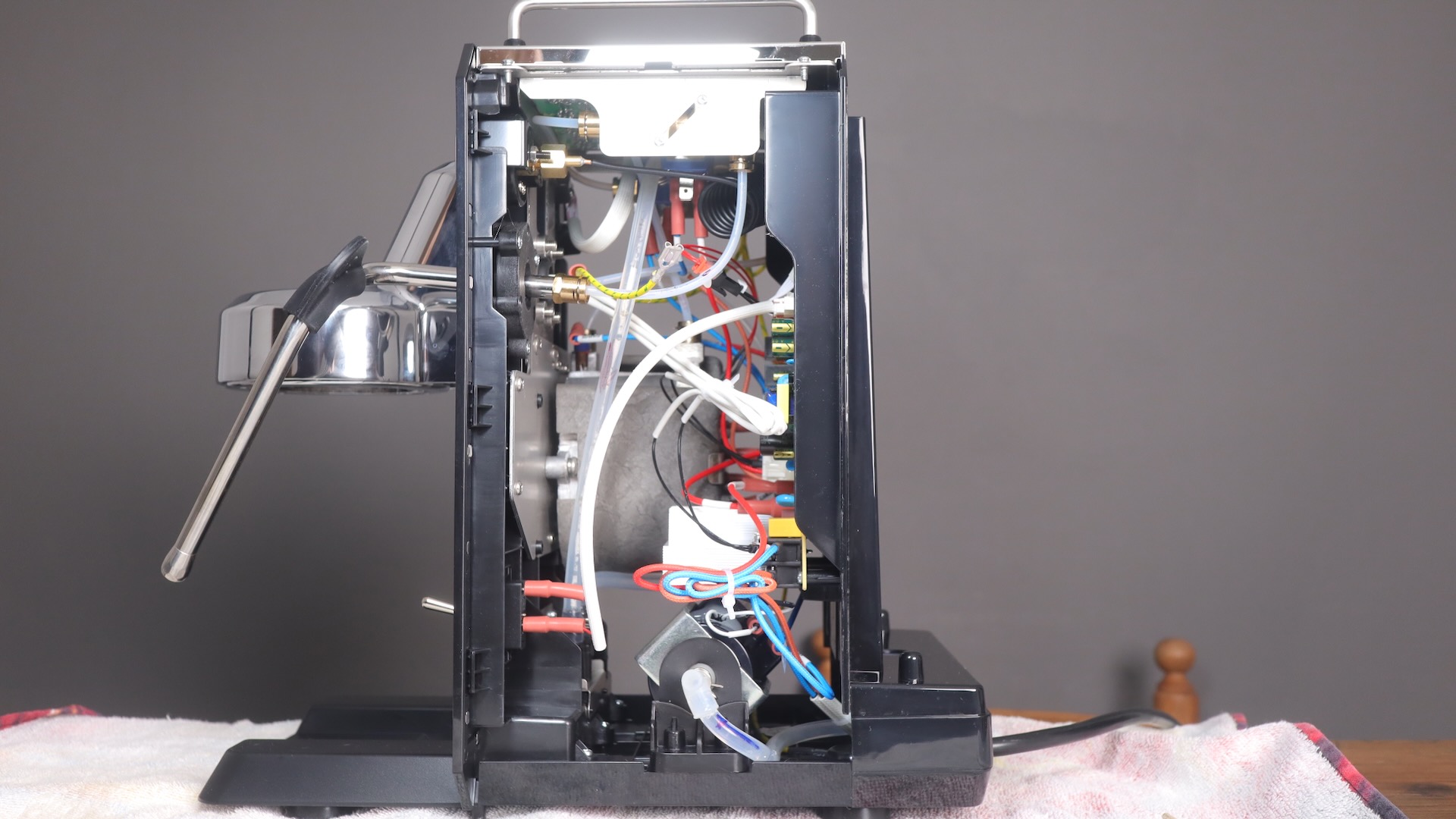
Gemilai Owl G3006 – Right side exposed vertical 2
I really do feel that THIS is the MAIN thing setting the Owl apart from many competitors in this price range. A heated brew group allows the espresso extraction to have the same temperature from the beginning to end of the water path. This is because the heated brew group also heats the portafilter and basket, giving a much higher consistency in heat along the brew path.
The result? Sweeter shots with better texture. This is a huge advantage over the Bambino Plus in my opinion, which cannot heat its brew group or portafilter.
PID control and Over Pressure Valve?
It’s hard to see in the pictures, but yes the Owl does have a thermoprobe for feedback to its PID controller. It’s at the exit of the thermoblock. By the way, PID stands for Proportial Integral Derivative. These are terms used in controlling an output based on feedback loops.
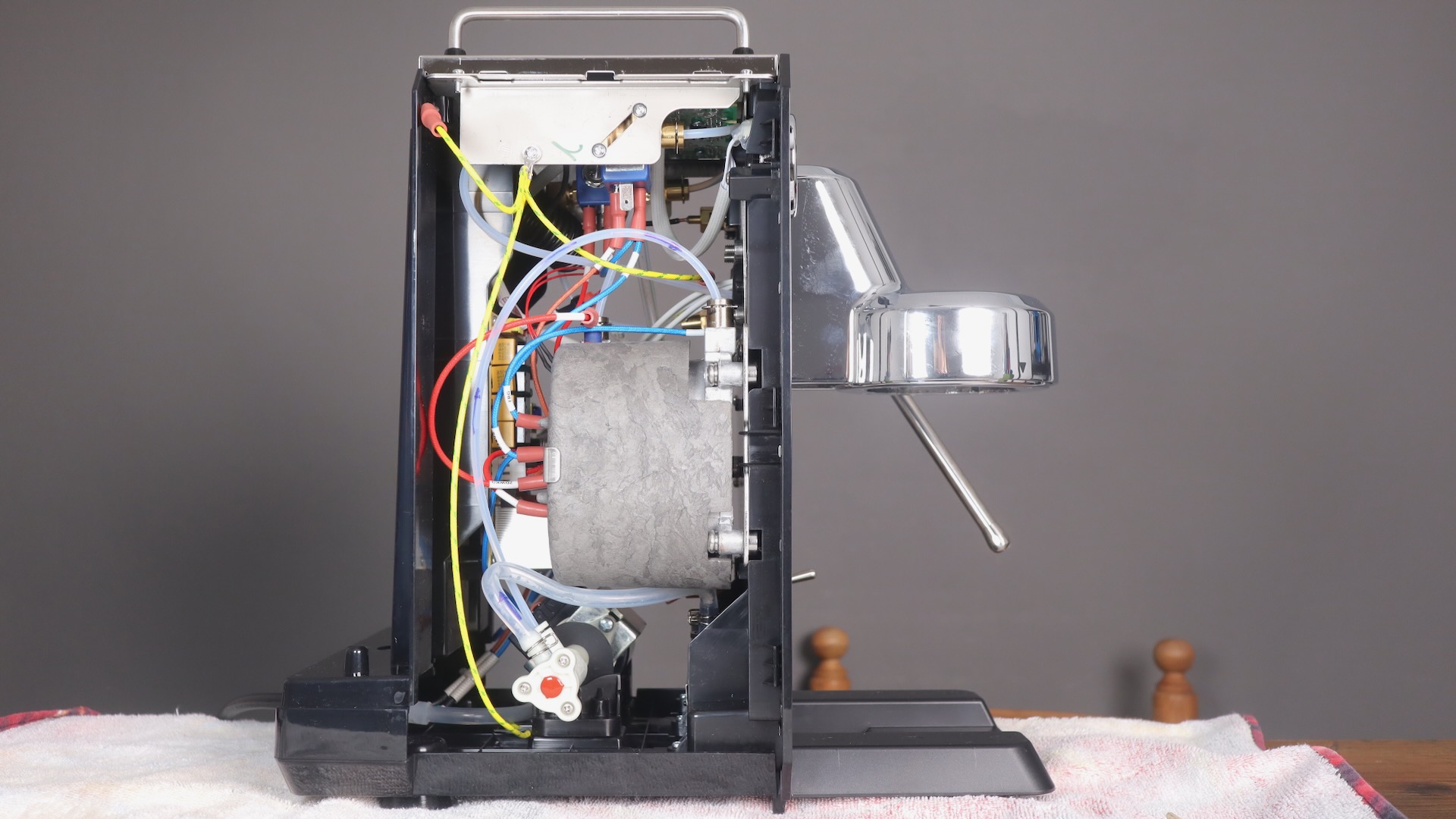
Gemilai Owl G3006 – Left side exposed vertical 2
Can you see the red dot on the white plastic part up above? That covers a screw to the OVP or Over Pressure Valve. Tightening this screw will decrease the MAXIMUM pressure of the extraction. The OVP works as a gate, diverting any pressure above its threshold into the drip tray.
Is it necessary to lower the maximum pressure via OVP? I’d say no, and it may also void your warranty! You just have to dose and grind so that you don’t hit such high pressures. Anyway, check out the teardown video below, if you’re curious what’s inside the Owl.
You are currently viewing a placeholder content from YouTube. To access the actual content, click the button below. Please note that doing so will share data with third-party providers.
More InformationPre-infusion and timed shots?
The Owl claims to have pre-infusion, but in fact it doesn’t. Or at best I’d name it a “pseudo pre-infusion.” All it does is wet the puck a little bit for 2 seconds. Then, you can set the pause. That’s it. Well, if you didn’t know, 2 seconds worth of water is not enough to saturate the puck, so I just disable the so called pre-infusion altogether.
Something a little unusual about Owl is its omission of a water wheel. Most thermoblock machines include a water wheel between the water tank and the pump, to count the water volume going by, which facilitates volumetric shots.
Instead of this, the Owl works with a timer. Press and hold the one or two cup button to set the time you want, with 10 seconds being the minimum, and 120 seconds being the maximum.
What’s the heat up time on the Gemilai Owl?
Thanks to its quick thermoblock, the Owl only needs about a minute to warm up the heater. Even so, the brew group and portafilter still need warming up, so I’d give those an additional 5 minutes. I’d also recommend running an empty shot through the machine too, just to get all the lines warmed up further and flushed with water.
As for steaming, this also takes about 1 additional minute, to get from espresso up to steam temperature. This is a bit long for a thermoblock, to be honest. The Delonghi Dedica for example only needs 10 seconds. But, when it does start steaming, the steam wand is excellent, and full of power.
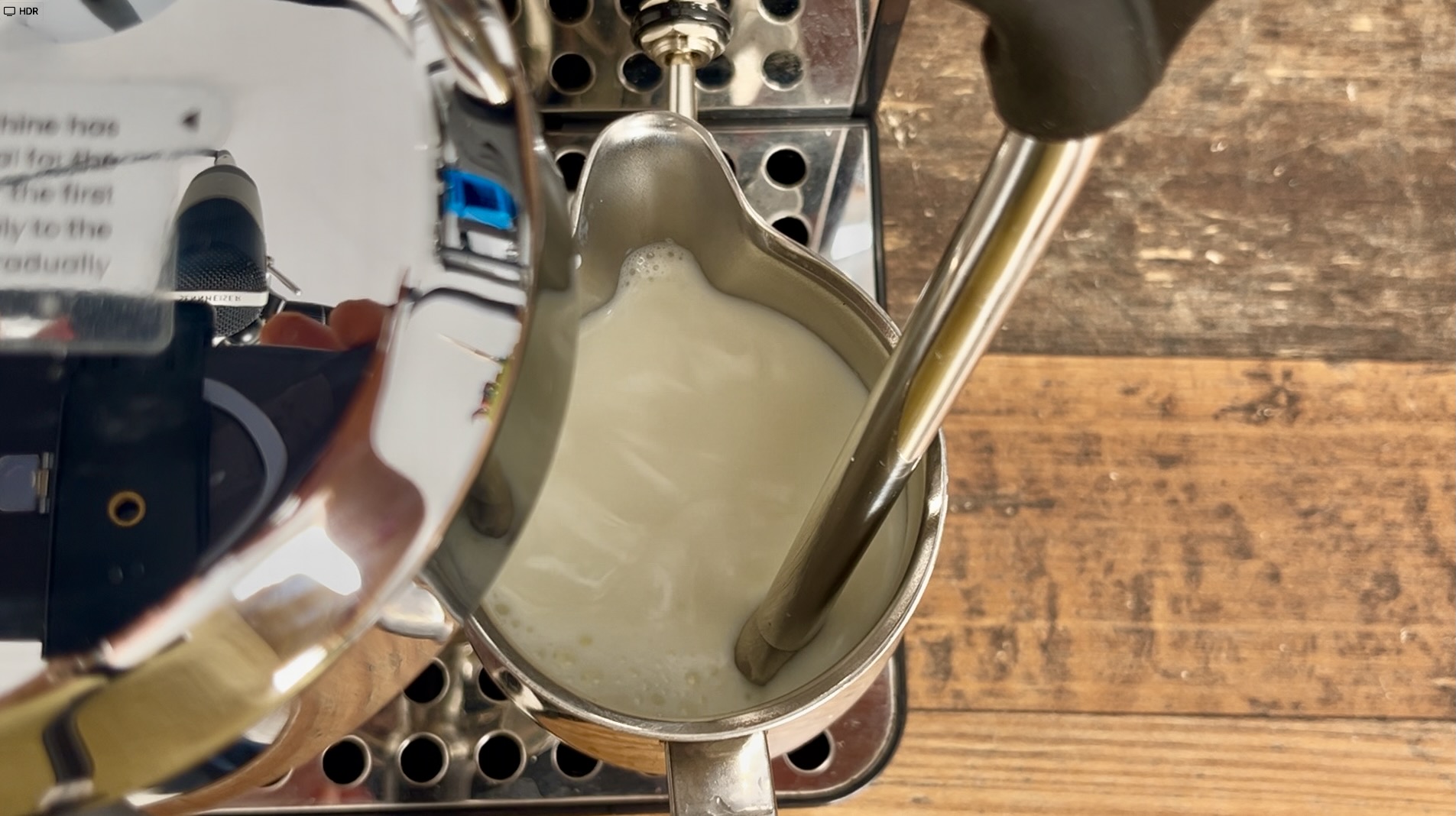
Gemilai Owl G3006 – Steaming milk
What’s the portafilter and accessories size?
I think that Gemilai realized that most people insist on a 58mm portafilter size, and went with that for their Owl. It does open up a lot of room for buying accessories, since 58mm is probably the most widely produced size. Therefore, you can buy from a large variety of bottomless portafilters and tampers, funnels, and so on.
The Owl comes with the 58mm dual spouted portafilter shown below, as well as a single and double basket.
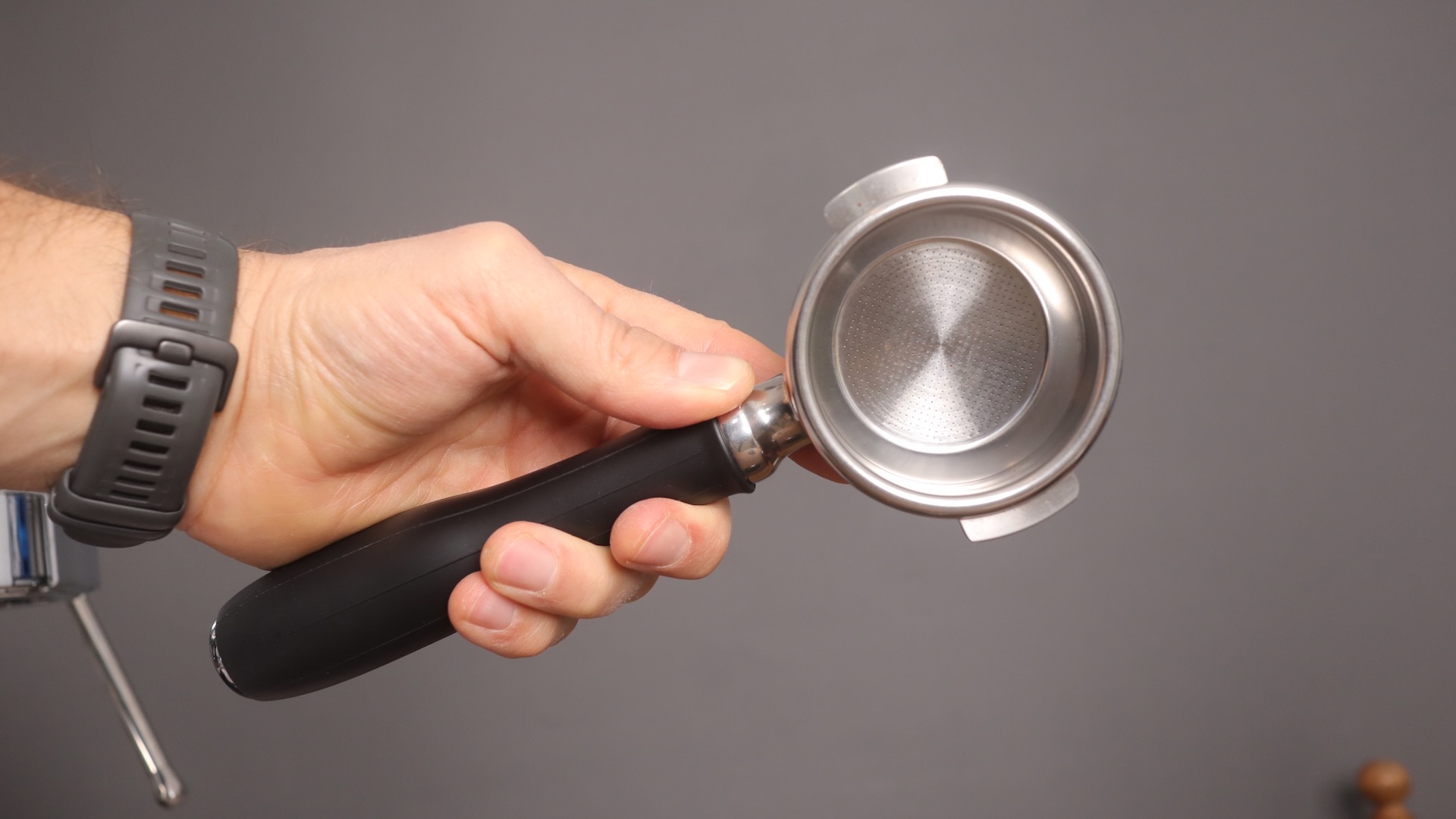
Gemilai Owl G3006 – 58mm stainless steel portafilter
Additionally, it comes with the tamper shown below. It has a stainless steel base, but the handle is plastic. Not bad for doing the job, but I’d prefer something a little more substantial.
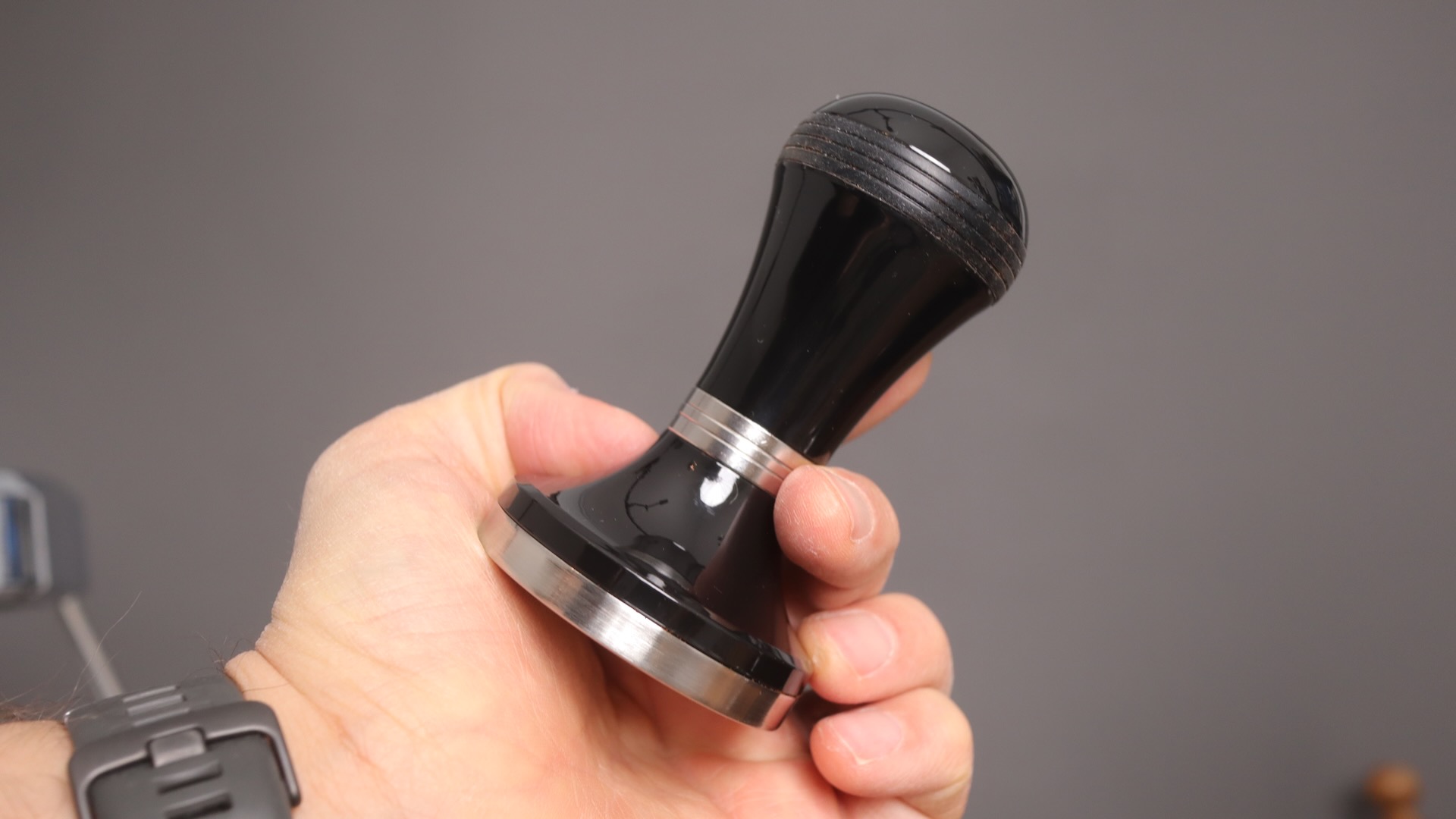
Gemilai Owl G3006 – 58mm tamper
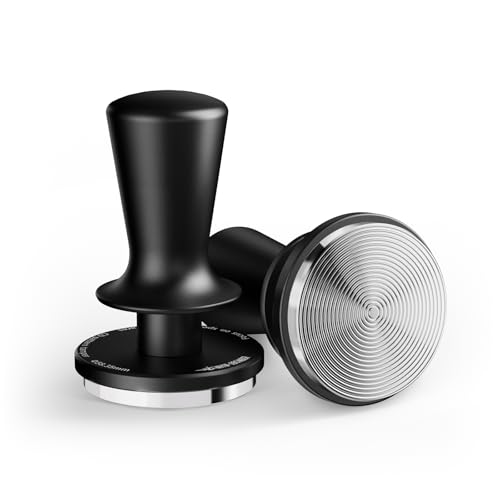
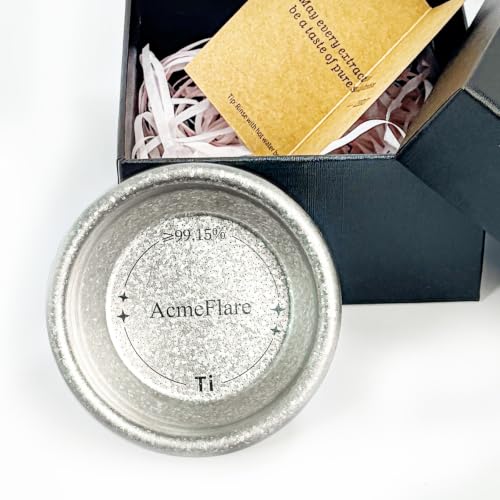
If you want a nice bottomless portafilter, and better self-levelling tamper for the Owl, or any 58mm machine for that matter, the linked choices are very nice. Knodos is a new player on the market, making nice espresso tools.
FIND BETTER TOOLS BELOW:
Better Accessories
While the accessories that come with the machine work well enough, they can be upgraded. I always find that a self-levelling tamper does a nice top at giving an even tamp. An upgraded basket can also give a higher extraction, and can with the right puck prep lead to a better shot. And of course, it’s always so nice to see your shot with a bottomless portafilter.

Materials
My most popular blog article has to do with plastic free espresso machines. It seems these days, that people want to avoid plastic and aluminum as much as they can, especially in the hot water paths.
Well, the Owl uses PTFE or teflon, as do most thermoblock machines. It also uses some silicone tubing.
Looking at the photo below, you will see that the pump gets its ambient temperature water via silicone tubing from the water tank. Then, it’s pressurized and sent up to the top of the thermoblock via PTFE tubing. From there, it is heated, and discharged from the thermoblock to a solenoid via PTFE tubing, on the right side of the machine. If this solenoid is open, this will open the path to the steam wand. If it’s closed, the hot water will be diverted to the left side of the machine, again via PTFE.
The PTFE then reaches a second solenoid, which goes to ultimately to the brew group when switched open, or to the water manifold, when the pressure is released after an extraction.
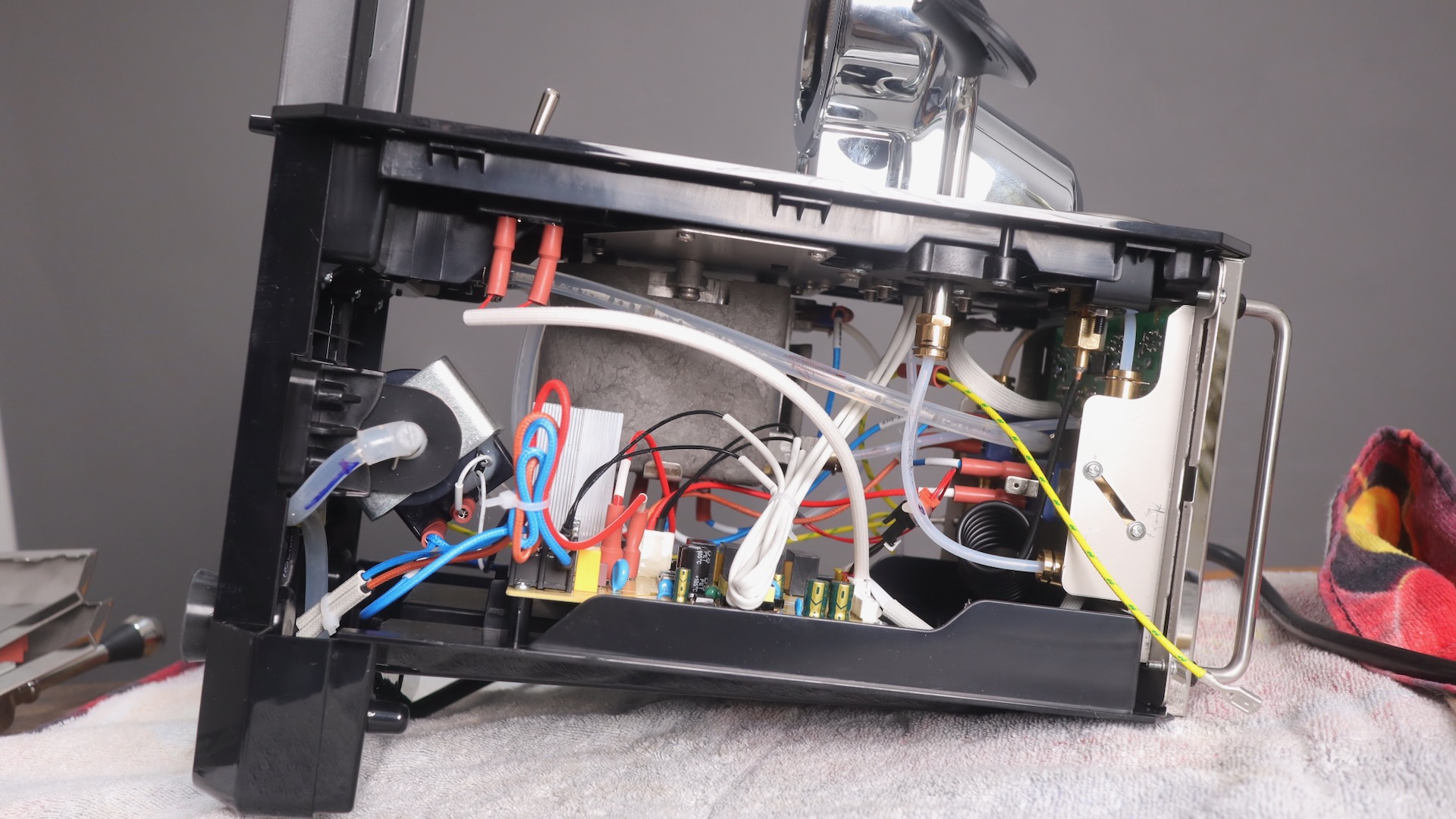
Gemilai Owl G3006 – Right side exposed horizontal
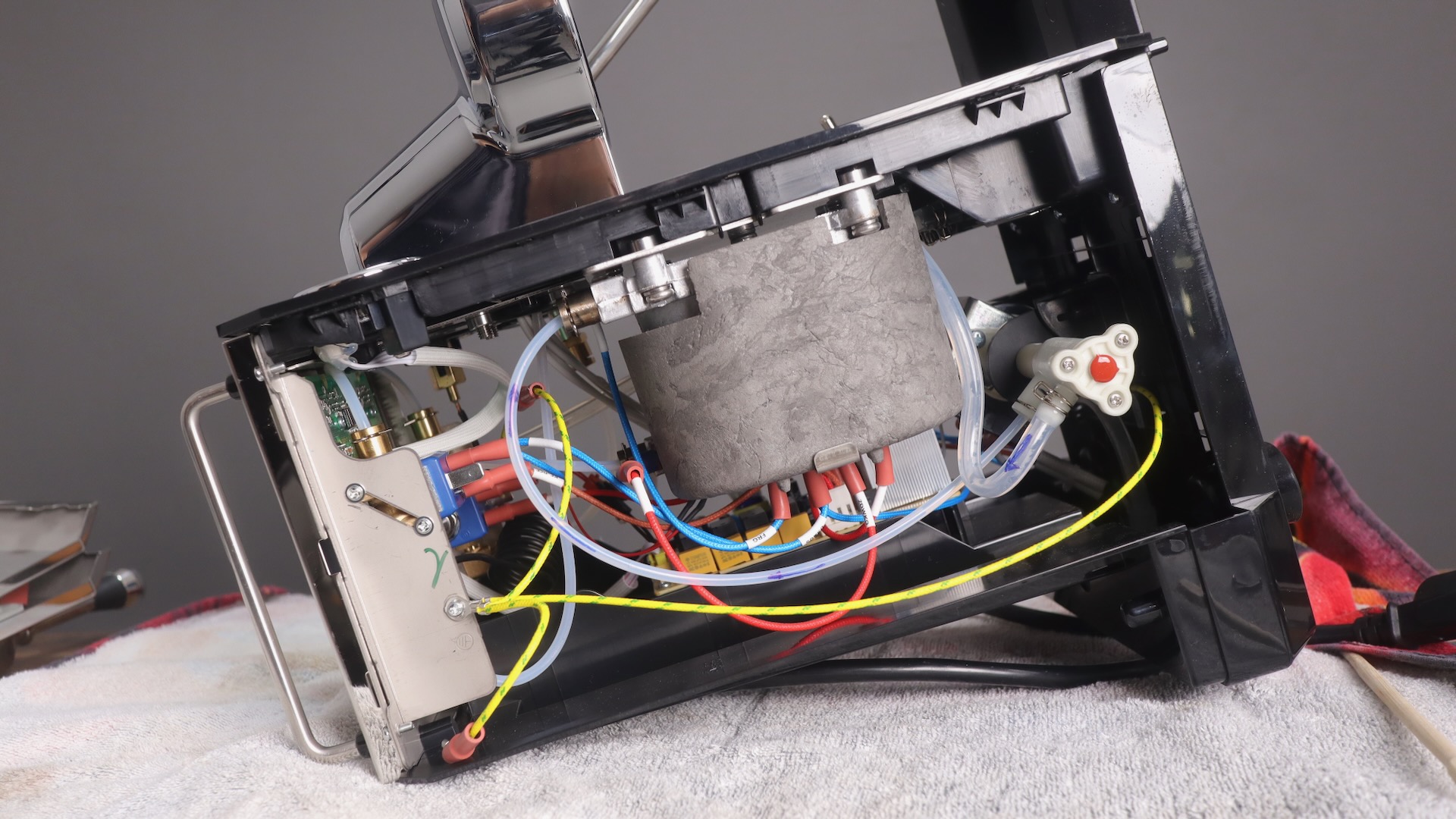
Gemilai Owl G3006 – Left side exposed horizontal
The outside of the machine is made of polished stainless steel, which is grounded on all sides (left, right, front and top). Kudos to Gemilai for a proper grounding of their machine.
Gemilai Owl G3006 – Hero photo
How is the Owl for Espresso and Milk Foam?
So far, I’ve really been quite pleasantly surprised with the Owl for both its espresso and milk foam.
When I first got the machine, I didn’t know what to expect. But with the heated brew group, and quite a good shower screen distribution, I get excellently textured shots – full bodied and unctuous. Much better than with the better known Bambino Plus, for instance. It’s also good that you can play with the temperature, and increase it for lighter roast coffees, or turn it down for dark roast.
Gemilai Owl G3006 – Espresso closeup
Steam pressure is also excellent. I really like the very long steam wand, which works well for auto steaming, too. Just position the wand to the top of the milk, and off to the side, and you’re off to the races.
What’s interesting is, it has a lot of power to get a vortex going, but it’s not so hot as to make milk steaming too short. You have a good 45 seconds to texture the milk, which is important, especially for beginners.
Gemilai Owl G3006 – Steaming milk
Specifications
The Owl is a medium sized espresso machine with the following specs:
- Stainless steel build on the outside
- PTFE and Silicone lines on the inside
- PID controlled, 1500 Watt thermoblock
- 14.57″D x 9.23″W x 15.47″H
- 17 pounds in weight
- 57 ounce water tank, without water sensor
- 10-120 second extractions possible
- Designed and made in China
Pros and Cons of the Gemilai Owl
The Gemilai Owl offers some great features for the price, and some cons too.
Pros:
- Heated brew group for tastier shots
- Excellent steam power and deep wand
- Shot timer and PID control
- Stainless steel exterior build
- Relatively quiet
- Fully manual button for longer shots
- Low(ish) price
Cons
- Ugly (in my opinion)
- No water level sensor
- No water counter (no volumetric shots)
- No real pre-infusion
- Plastic handled portafilter and tamper
- OPV not really made to be adjusted

- Heated brew group
- PID and Shot Counter
- Manometer
- Good steam power
- Ugly (imho)
- No water tank sensor
Verdict
I really think that Gemilai did a great job with this machine, and it’s helping them break into the North American and European markets. It makes very nice drinks, and it provides excellent value for the money.
I’d give this machine an B for features, and a A- for value.
By the way, this machine can be found under the name Cecotec in Europe. It’s pretty much exactly the same machine, but in 220V instead of 110V.
Videos:
You are currently viewing a placeholder content from YouTube. To access the actual content, click the button below. Please note that doing so will share data with third-party providers.
More InformationMore Photos:
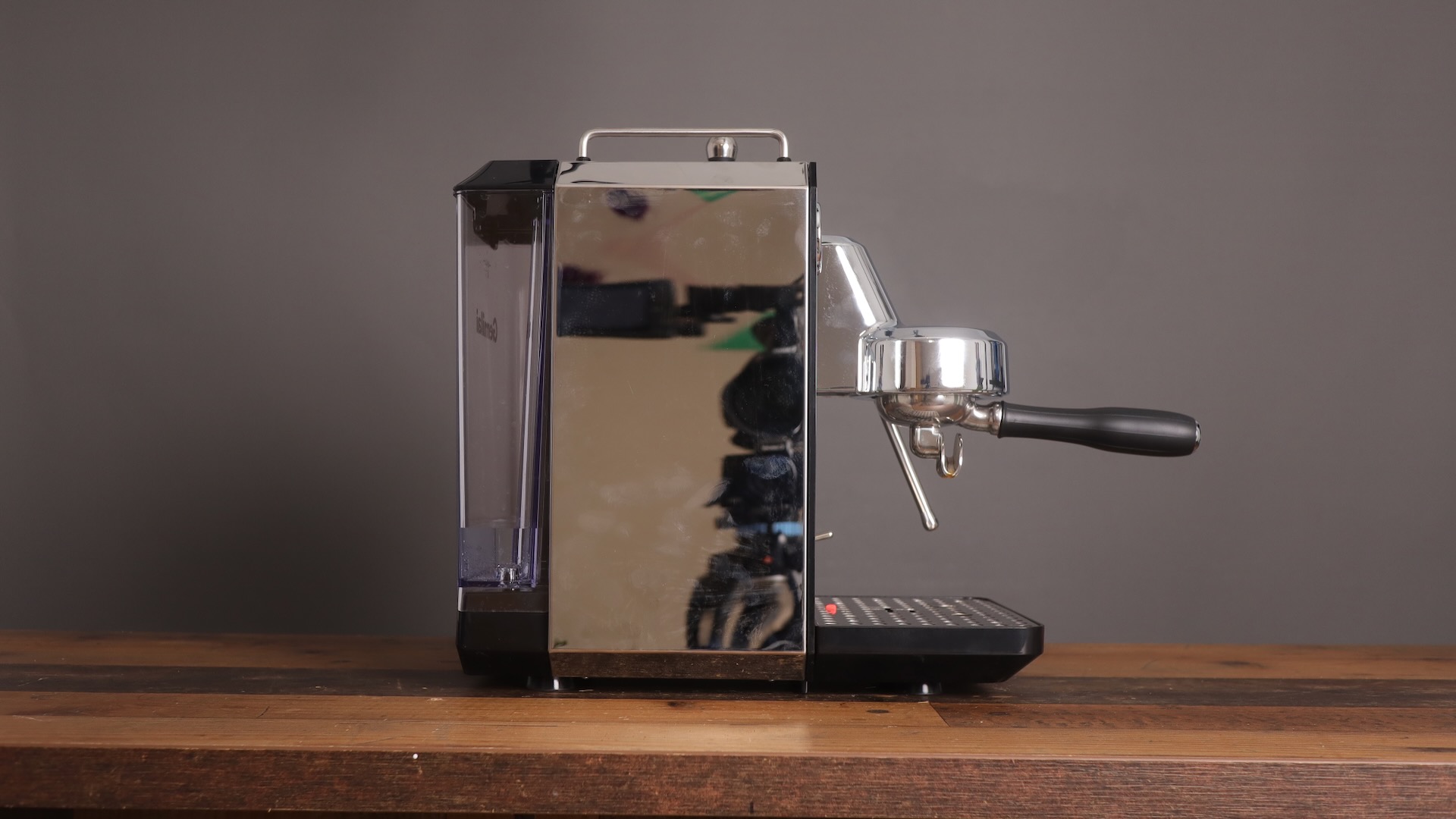
Gemilai Owl G3006 – Left side