Best Plastic Free Coffee Machines
What are the best plastic free coffee machines?
The avoidance of plastic in coffee or espresso machines is a question I get on a weekly basis. People don’t want any plastic in their espresso or coffee machines, especially in the parts where hot water is located. So, that begs the question: are there any such machines that operate completely without plastic?
If so, which types of machine are out there, and how easy are they to use, compared to the standard coffee maker?
What are the best selling coffee machines?
Before we look into plastic-free coffee makers, let’s look at a standard coffee maker. In fact, let’s look at the best selling coffee maker on Amazon. Below you will find the “12 Cup Coffee Maker” by Black and Decker. It sells nearly 20,000 units per month.
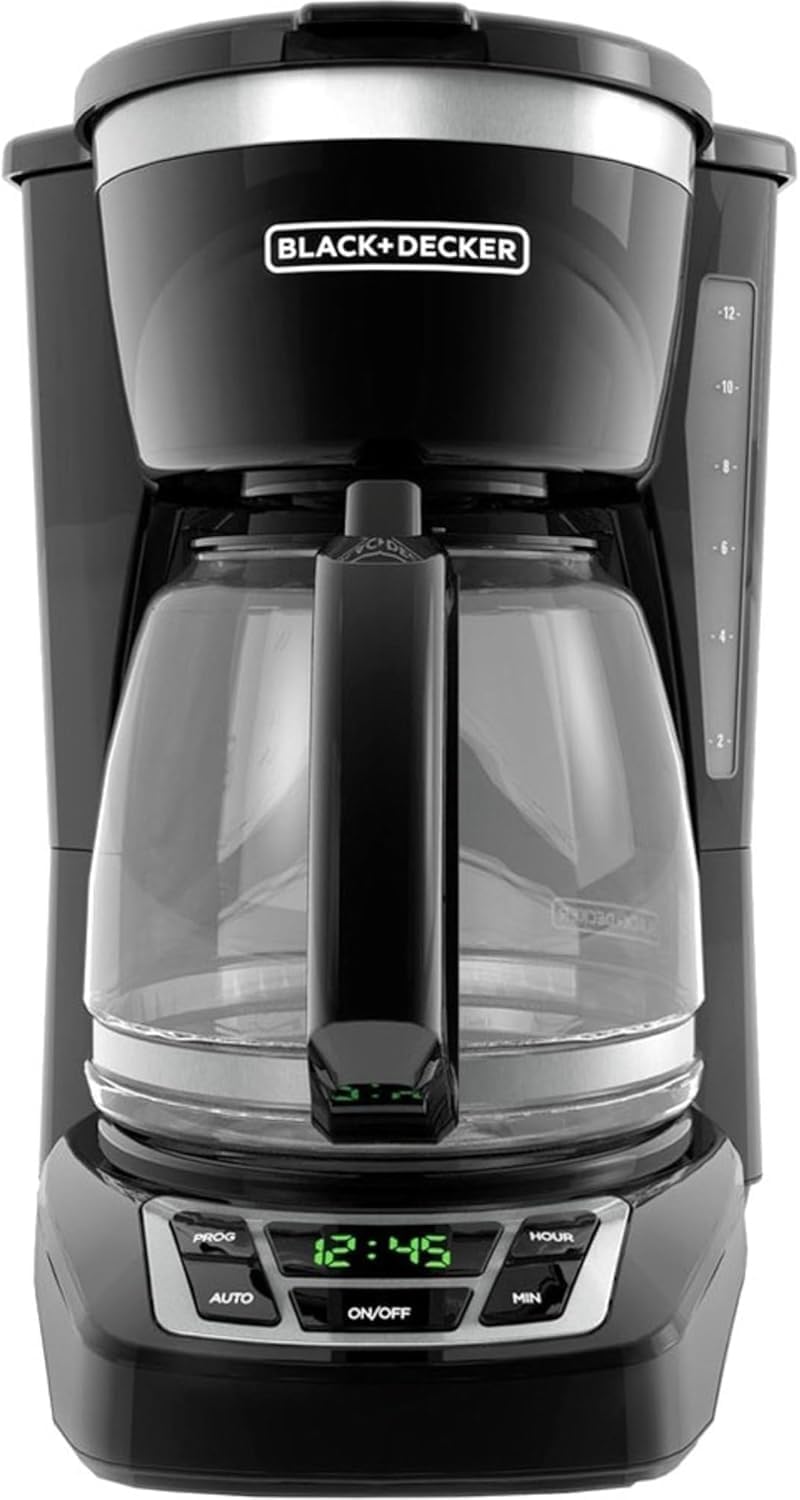
Looking at the above machine, you can see that besides the glass carafe, nearly the whole thing is plastic:
- plastic chassis
- plastic water reservoir
- plastic water distribution
- plastic dripper
Well, of course the above machine is also very affordable, which is probably why so many people buy it. But, let’s look at some options that use less, or NO plastic.
What are the best automated machines?
As with the Black and Decker above, there are many automated coffee makers, but not many that limit plastic. Even the very expensive Fellow Aiden is nearly completely plastic.
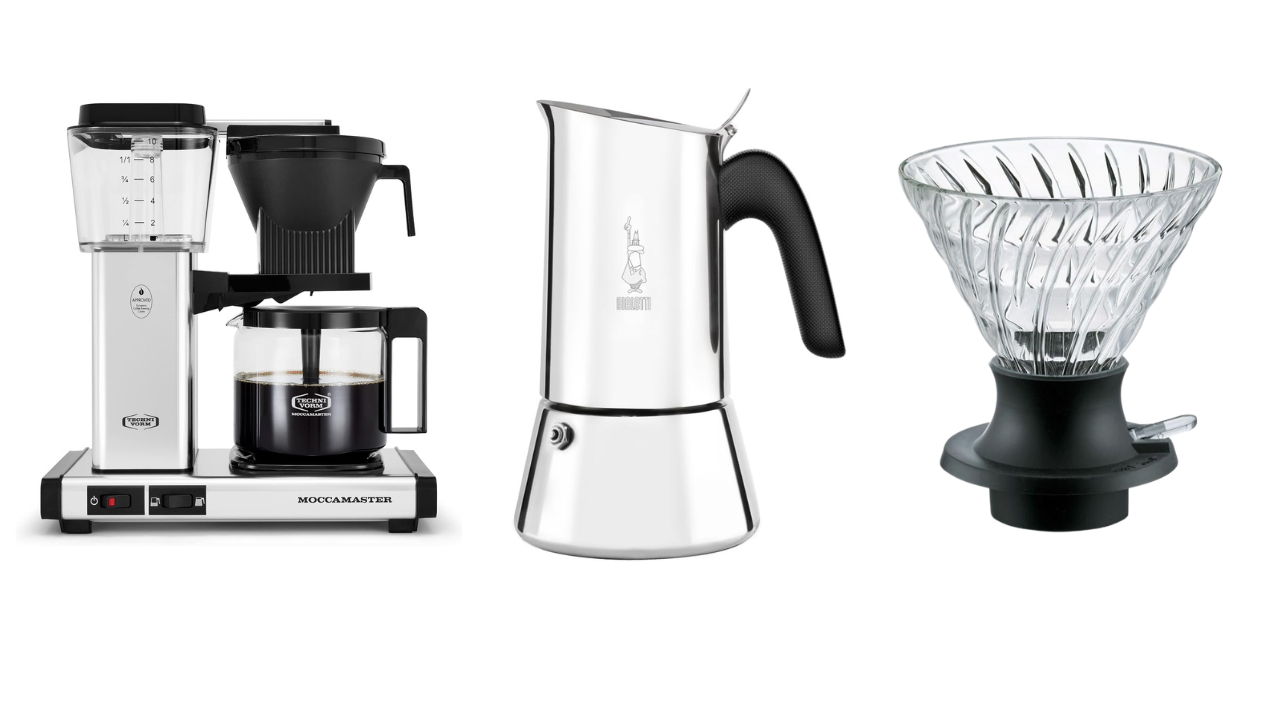
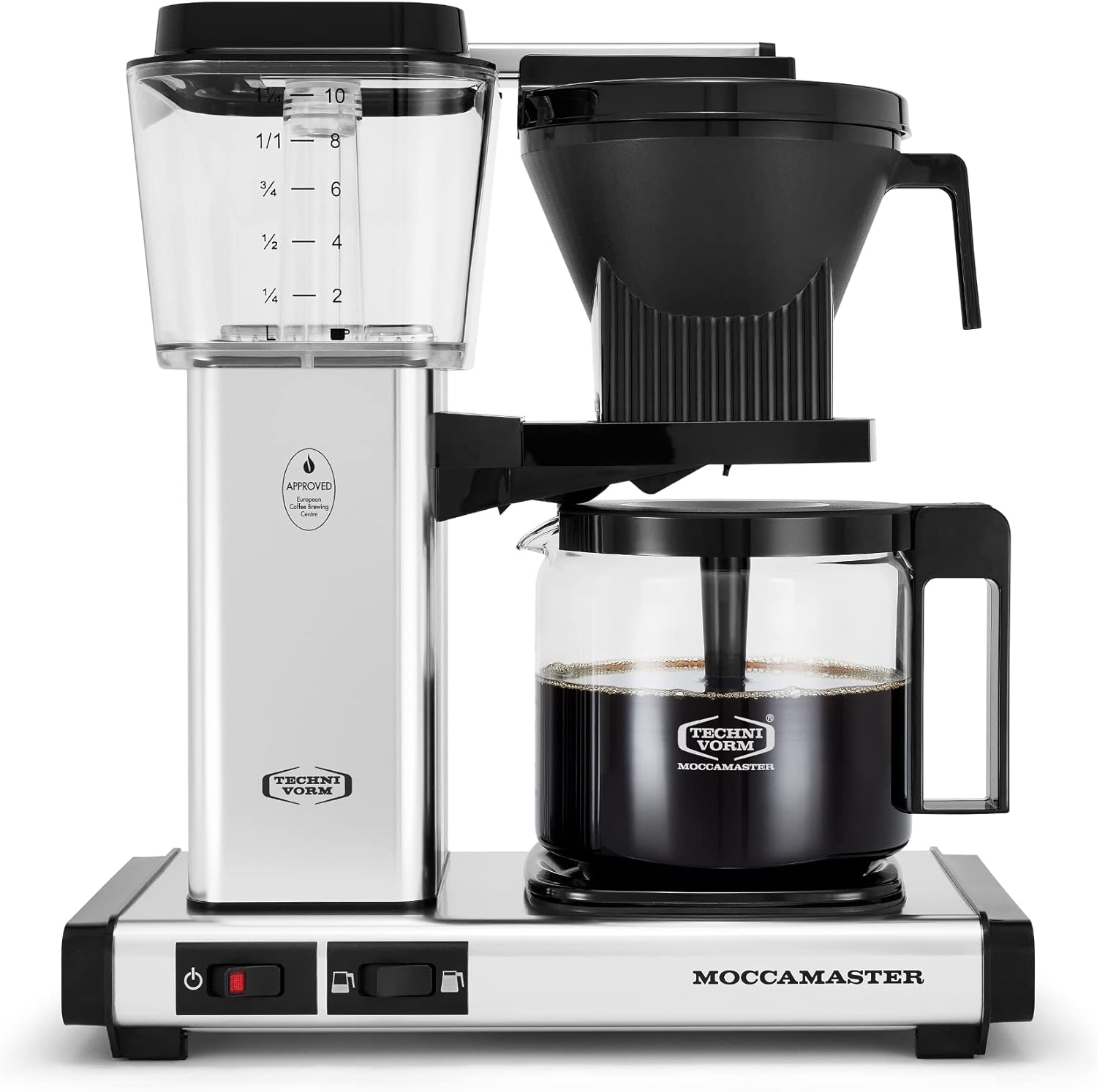
So far, the best fully automatic filter coffee maker that I know comes from the Netherlands. It’s the Technivorm Moccamaster – an iconic brewer that is still made in the Netherlands, and for which you can also buy spare parts easily. So, they last a long time.
The Moccamaster uses more metal and glass parts than your average coffee maker from Walmart. You will see that the body is made out of aluminum, the heater is made of copper, the water distribution is via stainless steel shower bar, and the carafe is glass. Also, the hot water stem is made of glass. Quite nice materials.
It is however not entirely plastic-less, as the water reservoir is made of plastic, and the dripper as well. To be fair, the water in the reservoir is at room temperature, and you could consider using a different dripper if you so inclined to do so. The plastic parts are BPA/BPS/BPF & phthalate-free, according to their website.
The Moccamaster makes a delicious, clean cup of filter coffee, and it uses the standard 1:15 or 1:16 coffee powder to water ratio.
Bialetti Moka Express
Another great option for plastic free coffee is the Bialetti Moka Pot. It is made solely from aluminum or stainless steel, and it has a rubber gasket. Well, the handle is plastic, but that’s it. The Bialetti is also super cheap, and pretty easy to use and maintain. This is the absolute standard in Italy, and you’ll find at least one in each household. It makes a strong coffee, somewhere between an espresso and filter coffee, with about a 1:8 ratio.
I do find the newer stainless steel Bialetti Venus to be quite a handsome brewer, and with its percolation stem, it seems to be a little quieter too. The Venus is made out of 18/10 food grade stainless steel, and has a silicone gasket inside.
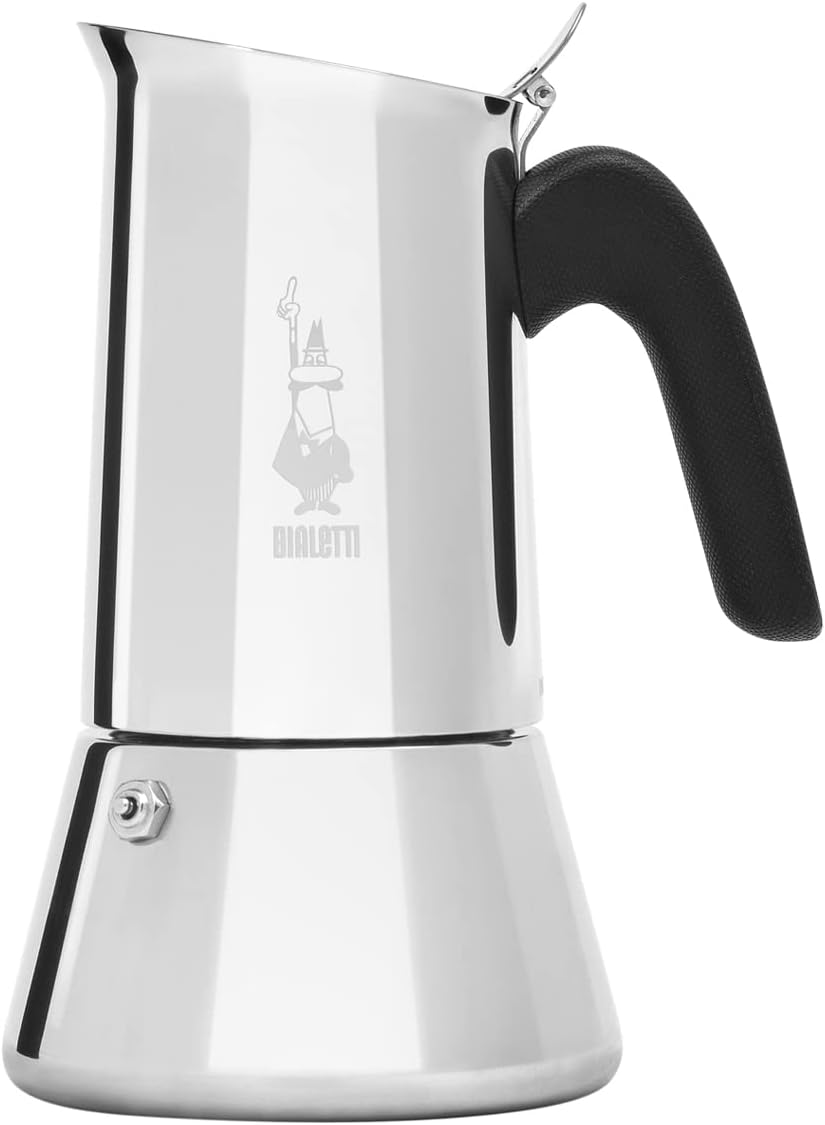
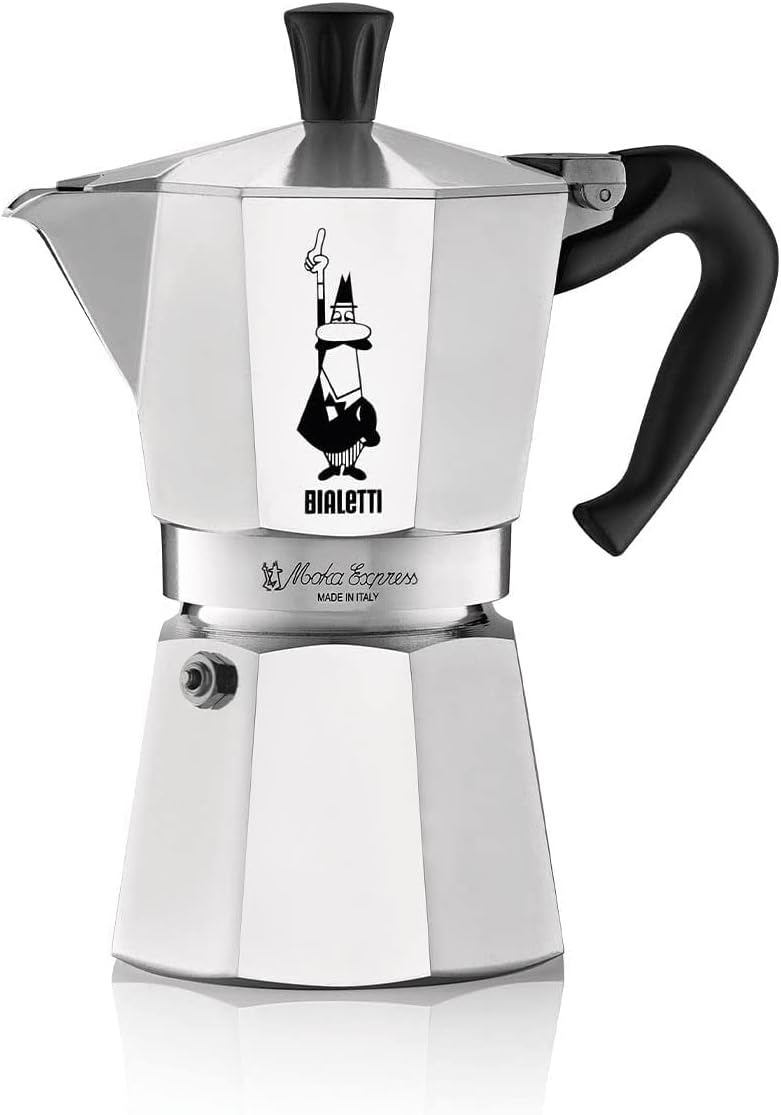
Now, when choosing a Bialetti, you have to know what size to get. I have both of the above variants in ‘6-cup’ size, which is measured in single espresso cups. So what I actually get out is 3 double espresso cups, or about 210 grams of coffee in the cup.
Therefore, about 275 ml of water fits in the chamber, 25 grams of coffee powder is added to the basket, and the yield is about 210 grams of finished coffee. That gives a ratio of about 1:8. The 6 cup is enough for my wife and I to split. For a single person, I’d suggest the 4 cup.
You are currently viewing a placeholder content from YouTube. To access the actual content, click the button below. Please note that doing so will share data with third-party providers.
More InformationPresto Percolator
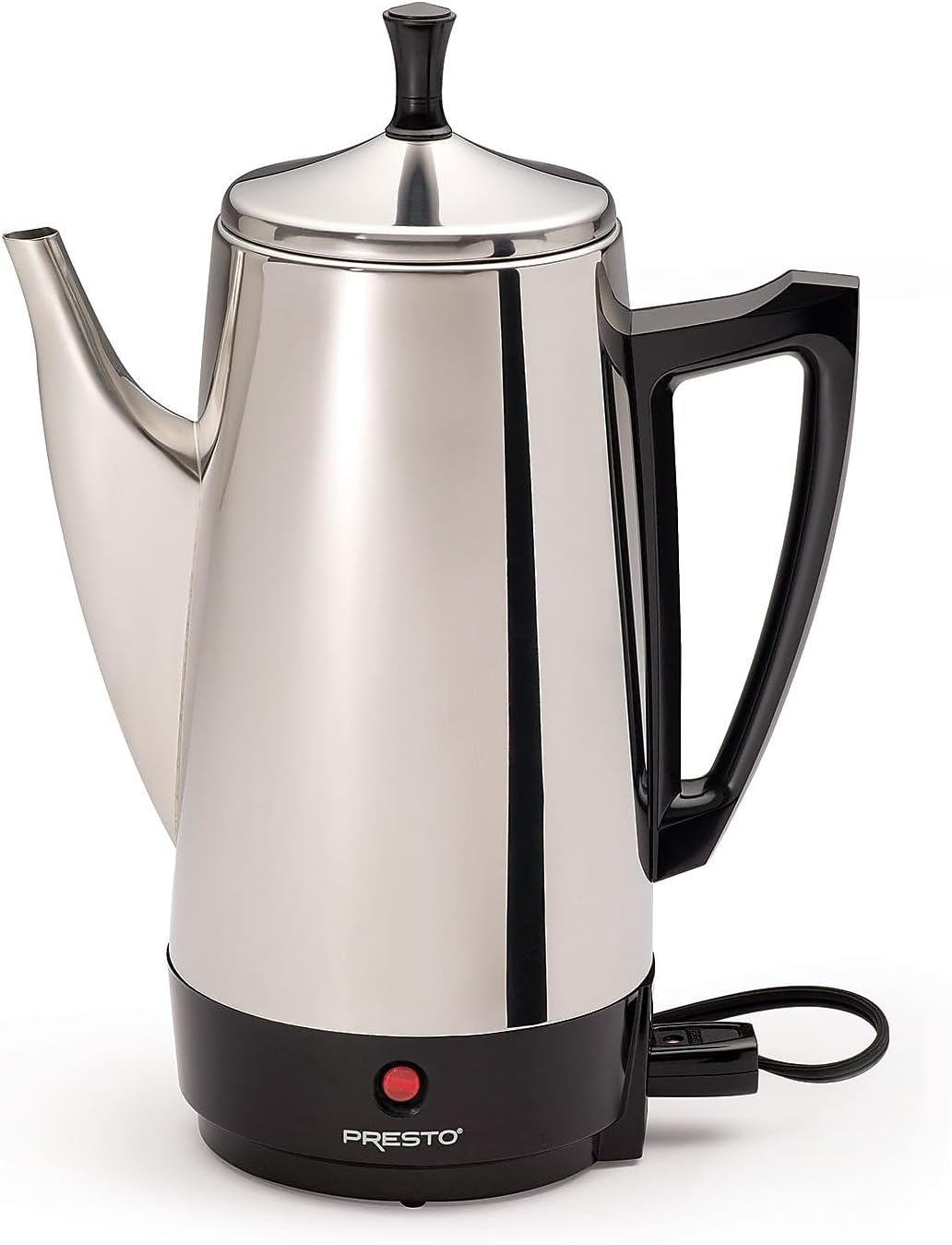
Another product you can consider if you want more coffee than what a Bialetti can give you is a percolator. Presto makes a stainless steel percolator that can make from 2-12 cups, and is removable from its base for easy pouring.
But of course the best thing about this percolator is that it’s really just made out of stainless steel and sometimes glass. It’s also easy to clean up, and makes that fun percolator sound. My granny used to have one of these, and I still remember her using it at all the family get-togethers. Our community center also uses a large percolator, which the goto method for large groups of people.
Since percolators recycle the brewed water through the grounds, this can result in a grainy and bitter brew if you let it run for too long.
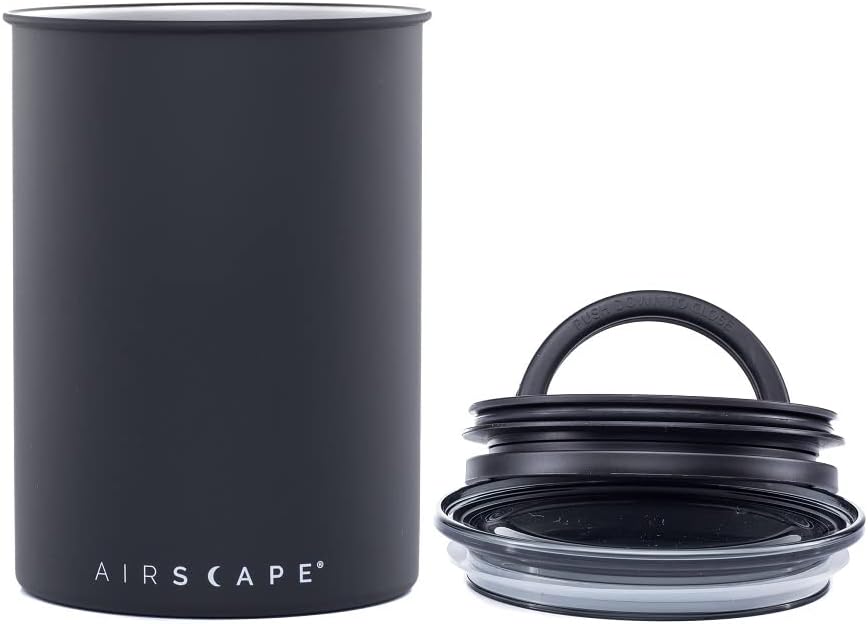
But no matter which coffee machine you get, you’ll need a good way to store your beans. Airscape offers a slick container that squeezes the air out via plunger lid with a valve in it. The Airscape is also made out of 18/8 grade stainless steel.
What about manual pour over brewing?
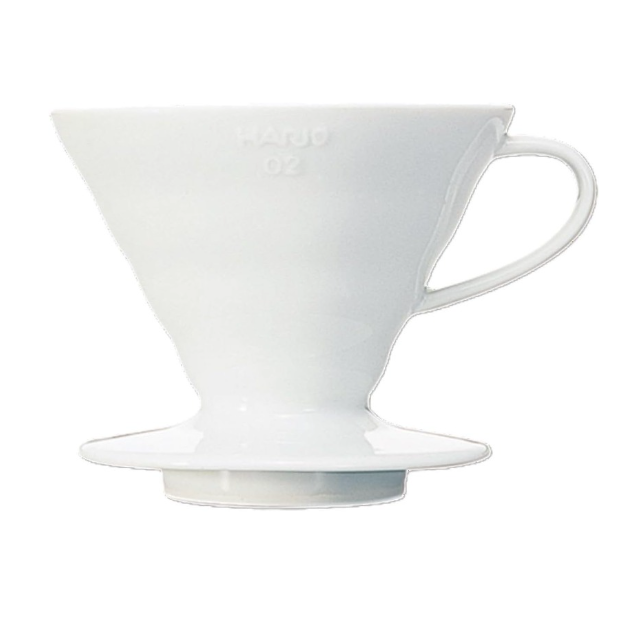
If you want a super clean brew, and don’t mind brewing one cup at a time, a manual pour over brew might be just right for you. Just know that it requires a little time and skill to learn, but it’s also a very fun way to make coffee.
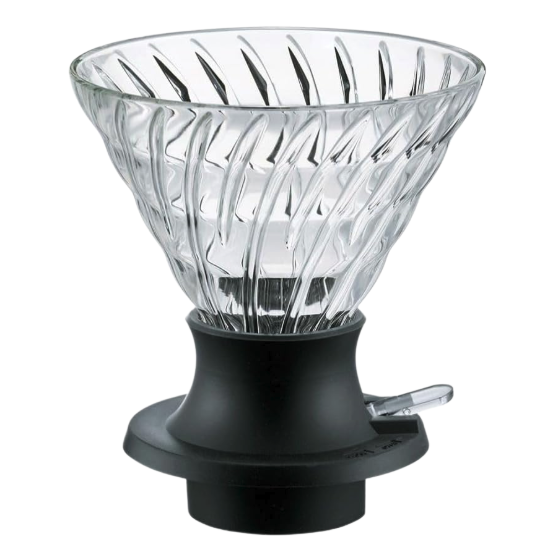
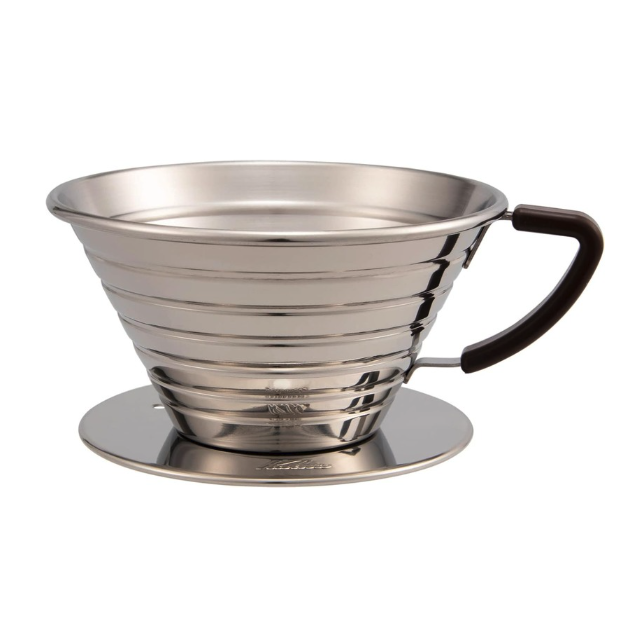
They make drippers in all different materials and shapes, the most common being plastic. However, you can also get pour over coffee drippers in glass, metal, and porcelain. Check out some examples below.
Summary:
I know that many people want to avoid plastic in their espresso and coffee machines. Thankfully, there are ways to avoid plastic in your coffee machine, and certainly it’s easier to do than in espresso machines. I wrote an article about that here.
If you want an automated option, I would say that the Technivorm Moccamaster is the best option, although it does still use BPA free plastic. It does make excellent coffee though, and is made of metal and glass besides the water reservoir and dripper.
Maybe the best option is the Bialetti Venus, which is a stovetop coffee maker that uses stainless steel in its construction, and it’s pretty cheap. It also makes a very nice, strong coffee.
Finally, pour over drippers are fun to play with, and you can choose between various materials and shapes.
Thank you for taking the time to read this article, and I hope it was helpful. Good luck finding your next coffee machine, hopefully with little to no plastic!